


Guerrilla 'Victory' Stories
Here is an overview of all Guerrilla Victory' stories.
Some stories have been kept anonymous at the request of the contributor.
And you have the chance to share your own story too (scroll down).
The Complaint Quarter
From moaning to ownership. In one meeting. #Rule-Mafia
Situation: A hospital ward is stuck in a culture of complaining. A new manager knows she needs to act fast - but without a major reorganization or lengthy management program.
The guerrilla move: In her very first meeting, she introduces a "complaint quarter": a flipchart, fifteen minutes, everyone gets to call out what's broken. Three pages fill up fast - a supplier who's consistently a day late, slow internal procedures, coffee that's been terrible for years. Then: pick one problem, put two people on it. Week one: two colleagues call the supplier and confront him with the real consequences of his delays. Week two: 50 euros cash for two others to sort out a decent coffee machine.
Result: Two months later, most of the list is resolved - not by management, but by the team itself. The atmosphere shifts. People discover they can actually take things into their own hands.
Worth trying if... you have a team that complains but doesn't take ownership. The trick: turn complaints into small, concrete actions - immediately, with a name attached.
Anti-Bureaucracy Week
The rule that disappears the moment you have to follow it yourself. #Rule-Mafia
Situation: At a large company, head office managers are increasingly out of touch with what's actually happening on the work floor. Procedures that seem logical from behind a desk end up strangling day-to-day operations.
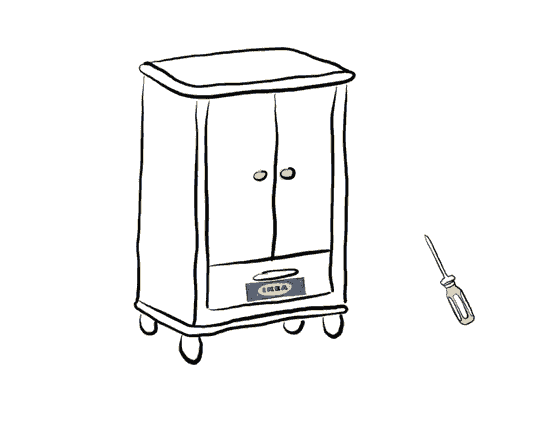
The guerrilla move: IKEA makes it a standing tradition: Anti-Bureaucracy Week. Every manager - including the CEO - spends one week a year working on the shop floor. CEO Anders Dahlvig put it this way: "In February I was unloading trucks and selling beds and mattresses." No exceptions, no symbolic hour. A full week, in operations - checkout, warehouse, customer service.
Result: Managers run straight into the rules they themselves created. A returns procedure that looks like three steps on paper turns out to require seven actions in practice. That kind of insight can't be captured in a report or a PowerPoint.
Worth trying if... you sense that decisions are being made by people who haven't been close to the work floor in years. Sometimes the best anti-bureaucracy measure is simply: go and stand there yourself.

Colruyt's Work Simplifiers
The people who get paid to cut rules. #Rule-Mafia
Situation: Processes grow. Rules pile up. What once made sense becomes dead weight over time - but nobody has the time, the authority, or the courage to do anything about it.
The guerrilla move: Colruyt Group creates a dedicated role: the work simplifier. Not an outside consultant, but an internal employee with one mandate: find ways every day to make work simpler - for colleagues and for customers. The core question they ask is straightforward: "How do we work now? How could it be better?" They observe and measure on the work floor itself. And critically: they also have the authority to actually implement the improvements together with staff - without endless approval rounds.
Result: Work simplification is now in Colruyt Group's DNA, and has spread across production, supply chain, retail stores, and support departments. The role has existed for decades and is still being actively recruited for.
Worth trying if... everyone knows where the inefficiencies are, but nobody has the time or mandate to address them. Sometimes the guerrilla move is: make it someone's official job.
Three Hours for a Dentist Appointment
The rule that did exactly what it was meant to prevent. #Rule-Mafia
Situation: At a mid-sized company, HR notices that some employees seem to be away an awfully long time for dental appointments. The instinct: there needs to be a rule. Maximum three hours away for a medical visit.
The guerrilla move: The rule is introduced - and immediately produces the opposite effect. Before it existed, staying away for a whole afternoon was the exception; most people were back within an hour and a half. But from the day the three-hour limit exists, everyone disappears for three hours. The limit doesn't become a ceiling - it becomes a norm. This phenomenon even has a name in behavioral science: the Peltzman effect - the paradox where a rule steers behavior in exactly the wrong direction. The real guerrilla move is what comes next: scrapping the rule. No fanfare, no communication campaign - just removing the procedure.
Result: After it was scrapped, the vast majority were back within an hour and a half again. The situation before the rule turned out to be better than the situation with it. More control had led to less trust - and more absence.
Worth trying if... you're tempted to introduce a procedure to manage an exception. First ask yourself: am I turning an exception into a new norm?

The Loophole Letter at the Police
When legal wasn't allowed to say no - but had to find a solution. #Yes-But Brigade
Situation: Rotterdam Police want to tackle vandalism on New Year's Eve. They already have a good idea who the likely offenders are. The plan: send them a warning by text. Immediately, the yes-but brigade steps in - GDPR doesn't allow directly contacting those individuals. Legal blocks it. Sending a letter with a direct form of address isn't allowed either - you can't accuse someone without evidence.
The guerrilla move: The manager gives legal a different brief: not "tell me why this can't be done," but "make sure I don't get prosecuted - and solve it." The result is a letter with an opening line that has since become legendary: "If you know someone, who knows someone, who might be considering committing vandalism on New Year's Eve - please let them know that we will be enforcing particularly strictly this year." Three degrees of separation. Legally watertight. And yet landing in exactly the right letterboxes.
Result: The letter reaches its target - and the convoluted sentence becomes a classic example of creative navigation within the rules.
Worth trying if... you treat legal, compliance, or HR as the end of the road rather than the starting point. The question isn't "is this allowed?" - it's "how do we solve this within the rules?"

The Cleaner Who Outperformed the Doctors
Why the solution was in the mop bucket, not the lab. #Yes-But Brigade
Situation: At Pittsburgh Veterans Hospital, an MRSA infection keeps coming back. Doctors and nurses follow the protocols - and still. The yes-but brigade is ready: not enough staff, patients not following the rules, a problem too complex for a simple solution.
The guerrilla move: The hospital organizes conversations with everyone - from surgeons to cleaning staff. Cleaner Edward Yates notices something no one else had seen: non-isolation rooms are being cleaned superficially, while isolation rooms get thorough treatment. But MRSA bacteria don't read the sign on the door. He develops his own protocol, explains it to colleagues - many of whom don't speak fluent English - using drawings, and adjusts the cleaning approach. No management decision, no budget. Just someone who sees what's going wrong and fixes it.
Result: The MRSA infection rate drops by more than 50% in just over a year.
Worth trying if... you assume the solution has to come from the experts. Sometimes the cleaner sees what the doctor doesn't - because nobody ever thought to ask.

The Shrimp Secret in Vietnam
How one different question led to 80% less malnutrition. #Yes-But Brigade
Situation: In the 1990s, Vietnam is facing widespread child malnutrition. The government wants to intervene, but immediately hits the classic yes-buts - not enough money, not enough resources, cultural habits that are hard to change, a problem too big to fix quickly.
The guerrilla move: Researcher Jerry Sternin ignores the blockers and asks one different question: which children are healthy, in the same poor villages, with the same resources? He discovers that some mothers feed their children differently - small pieces of shrimp and sweet potato that aren't traditionally considered children's food, given three or four times a day instead of twice. No extra money, no outside food. Just a different behavior that already existed. Then, rather than having an expert explain what to do, they ask those mothers to show other mothers directly - hands-on, in the kitchen.
Result: Within two years, malnutrition in the participating villages drops by 80%. The program later spreads to other countries.
Worth trying if... you're stuck on "yes but, we don't have the resources for that." Sometimes the solution is already inside your own organization - with someone who simply does things differently, without anyone having noticed.

We Started a Little Club
What if you just didn't organize it yourself? #Doubt Dictator
Situation: Driesen is a group of twenty smaller companies with around eight hundred employees in total. HR wants to strengthen internal connections - but immediately runs into its own inner yes-but brigade: who's going to organize this? Do we have time for that? What if nobody joins?
The guerrilla move: Instead of rolling out a program themselves, they let go. Any employee can start a club around their own hobby or interest - with three simple conditions: a minimum of eight participants, at least two events per year, and five hundred euros in budget from the organization. No further steering, no approval committee, no HR oversight.
Result: In a very short time, more than twenty clubs are launched - a chess club, a motorcycle club, even a band. Connections HR could never have designed or planned. The goal - informal contact between employees - is achieved without the organization hovering over it.
Worth trying if... you think you need to figure everything out before you start. Sometimes the guerrilla move is: give people a small framework and a small budget - and step aside.
My First Presentation in New Zealand
Yes but... I don't know anyone in New Zealand. #Doubt Dictator
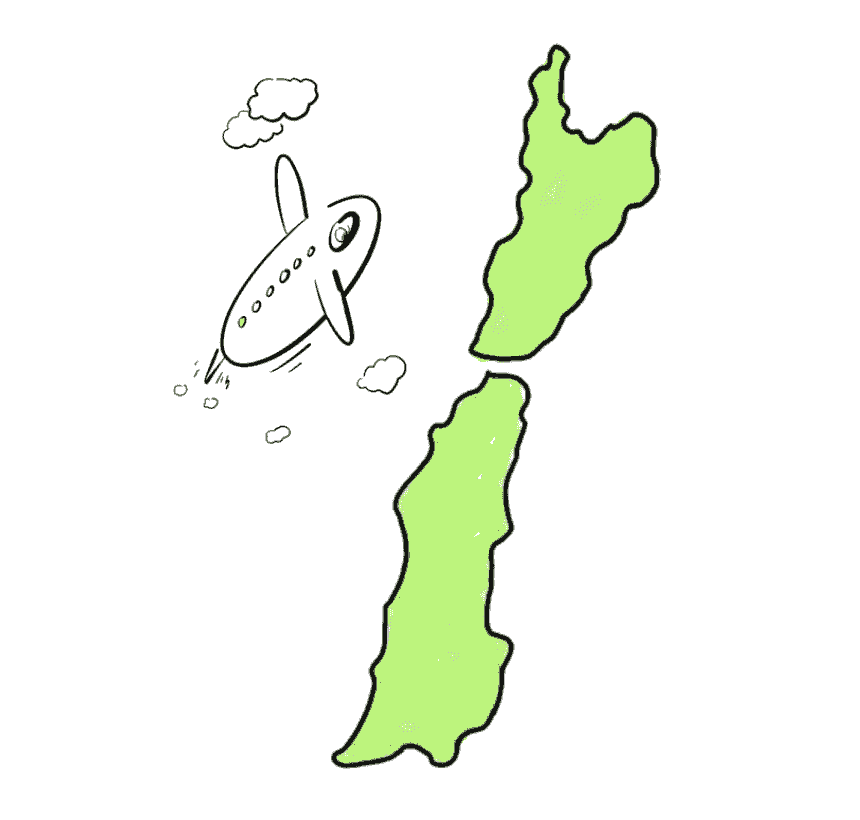
Situation: A Belgian speaker (yours truly) has a naive ambition: give a presentation in New Zealand - the other side of the world. The problem is as simple as it is paralyzing: he doesn't know anyone there. The inner doubter whispers: who do you think you are, reaching out cold to strangers on the other side of the planet?
The guerrilla move: He goes to LinkedIn, types in the region "New Zealand" and the keywords "creativity and innovation" - and gets thousands of profiles. He picks the first ten. Using their name and company, he finds an email address via Google in thirty seconds. He sends a personal message: would they be up for a virtual coffee, or willing to host him if he ever made it to New Zealand? Ten emails sent. Four replies. Two serious conversations. Nine months later, he's standing on a stage in New Zealand. (PS: just enough to cover his plane ticket.)
Result: Since then, he's been back to New Zealand six times and has worked in more than forty countries. Note: this LinkedIn technique hasn't worked in every country - but that's precisely the point of experimenting.
Worth trying if... you're waiting for the right moment, the right network, or the right permission. Sometimes the only obstacle is the doubter in your own head. Anyone can send a few emails.

When the Traffic Lights Disappeared
Fewer signs. Fewer deaths. #Rule-Mafia
Situation: In the 1980s, Dutch traffic engineer Hans Monderman faces a problem: a dangerous intersection in the Frisian village of Oudehaske. The obvious solution is right there - more signs, more rules, more signage. Monderman thinks in exactly the opposite direction.
The guerrilla move: He removes the traffic lights. The signs come down. The lane markings disappear. Pedestrians, cyclists, and cars share the same space with no explicit rules. His reasoning: when nobody knows who has right of way, people start making eye contact again. Responsibility emerges where rules end.
Result: Accidents drop sharply. The concept - Shared Space - spreads across Europe. Cities including Londonderry, Copenhagen, and Berlin follow. Monderman is invited to speak worldwide. His provocative conclusion: "The more rules, the less responsibility."
Worth trying if... your instinct is to reach for a procedure, a rule, or an extra approval. Sometimes a rule protects nobody - it just relieves people of the need to think. Ask yourself: what happens if this rule isn't there tomorrow?
The Rotating Safety Manager
From control to ownership. Without a safety coordinator. #Yes-But Brigade
Situation: A production department has been struggling with safety culture for years. Wearing helmets, storing equipment properly, connecting cables correctly - it never quite sticks. The yes-but brigade is ready: isn't safety the safety coordinator's job? Do these people have the expertise for it? And do we really have time for this on the floor?
The guerrilla move: Instead of adding more control or another procedure, the team flips the responsibility. Each week, one team member gets the title of "safety manager" - rotating, everyone gets a turn. That person gets fifteen minutes a day to walk around and note what they notice: a power cable not properly connected, clutter in a walkway, a missing safety sign. At the end of the week: a short stand-up where the safety manager shares their findings with the team. No report, no sanctions - just: here's what I saw this week.
Result: Engagement around safety rises significantly. People who have taken a turn on the round start seeing the work floor differently afterwards - they keep noticing things. The issues that get flagged are exactly the things an external safety coordinator would never spot. The system works so well it's since shifted from weekly to monthly.
Worth trying if... you notice that safety rules exist on paper but don't live in practice. The trick: don't give people a rule to follow - give them a role to step into. Ownership doesn't come from control. It comes from moving responsibility to the people who know the work.
The Best 1-Star Review in the Netherlands
How to beat the system by not playing it. #Doubt Dictator
Situation: Every business chases five-star reviews. More stars, more visibility, more new customers. The inner doubter whispers: what if customers write something negative? What will people think if our score is low? We can't afford to look bad on Google.
The guerrilla move: Martijn Verspeek, owner of an installation company in the Brabant town of Valkenswaard, takes a hard look at the review system - and reaches a radical conclusion: five-star reviews have become worthless. You don't know who's writing them. Companies beg for them. You can just buy them. And let's be honest: the reviews people actually read are the one-star reviews. So he asks his customers - his fans - to do exactly that: give us one star on Google. But write the most glowing text you can underneath it. A 1-star review with a fan letter beneath it: the system breaks down, and that's exactly the point. Google isn't happy about it. They remove his profile. He starts again.
Result: A Google rating of 2.1 - with reviews bursting with enthusiasm. New customers don't come via Google; they come via other fans. The company has a waiting list of people who want to work there and customers who are fans - without spending a single euro on Google Ads.
Worth trying if... you feel like you have to play along with a system you don't trust. Sometimes the guerrilla move isn't improving the system - it's ignoring it and following your own logic. The inner doubter asks: what will people think of us? Martijn's answer: my fans know exactly what they think. And they write it underneath a 1-star.
More info: https://www.martijnverspeek.nl/
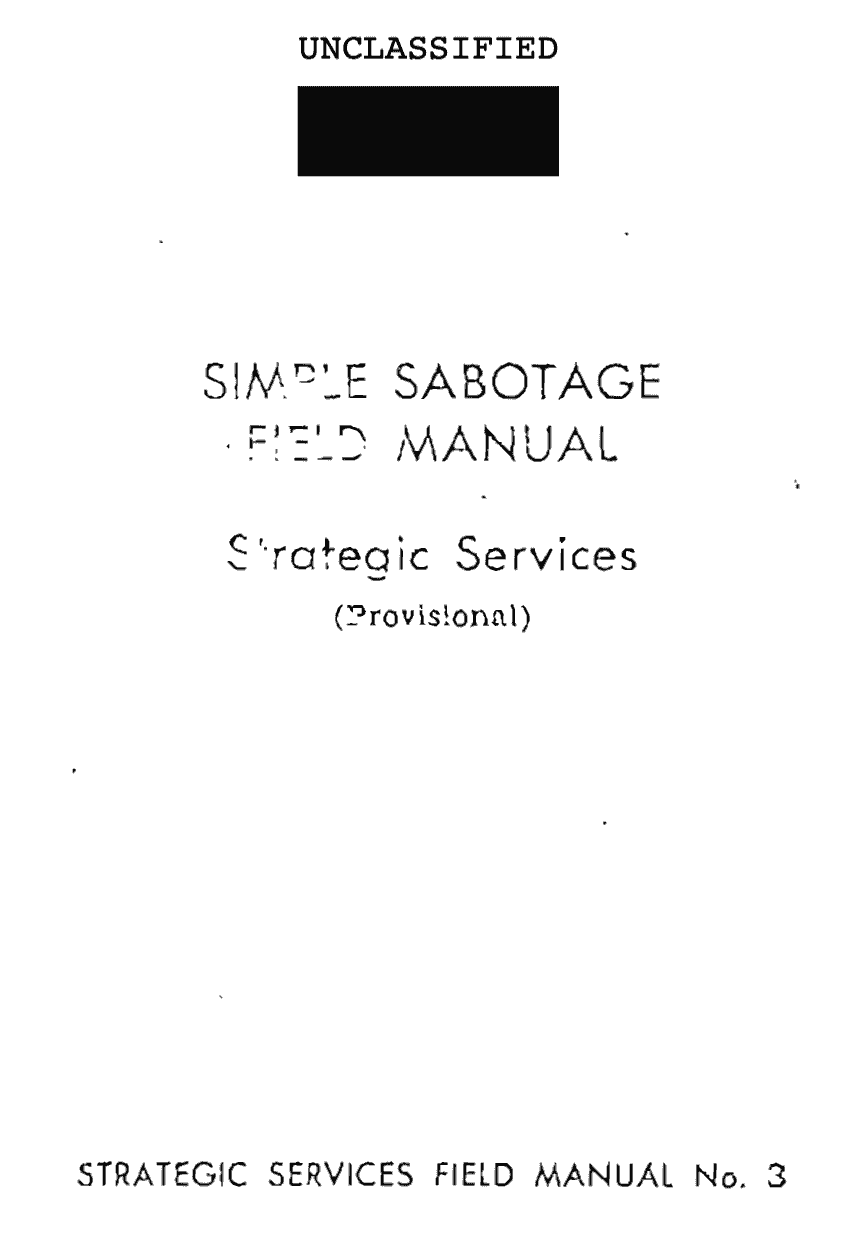
CIA Simple Sabotage Field manual (1944)
You can download the full manual as a PDF right HERE. The last 5 pages cover sabotage techniques within organizational structures. Enjoy.


