

For those with only 15 seconds: To make change specific, ask one question: can I take a picture of the behaviour I want to see? A vague goal paralyses, while a picture forces you to choose who does what, where and when. Then let everyone choose 3 to 5 specific actions themselves.
An organisation wants to become more sustainable. It is in the annual plan. It is on the slides of the management team. Everyone nods.
Then everyone goes back to their desk. And nothing changes.
Not because people do not want to. But because nobody knows where to start.
Many organisations have big ambitions. Sustainability. Customer focus. Innovation. Beautiful words. But as long as they are not tangible, they stay on the slides. And when people do not know where to start, they simply do what they have always done.
Why do vague change goals fail?
A vague goal feels like a plan. But it is not a plan yet.
What should you do differently tomorrow if the goal is "be more sustainable"? There is no answer. And when there is no answer, we choose what we know. Not because we are lazy. It is just easier.
Vagueness is paralysing. That is why "too vague" is one of the three reasons change gets stuck. The other two: too big and too complex.
For each of these three, there is an answer. I sum them up as SSS: Specific, Small and Smooth. This article is about the first S. How do you make a change specific?
What is the picture test?
There is a practical way to kickstart change. Ask yourself one question:
Can I take a picture of the behaviour I want to see?
If the answer is yes, your goal is clear enough. If the answer is no, you still have work to do.
Take the example of sustainability again. "We want to be more sustainable." You cannot take a picture of that.
"We want to reduce energy use" is still vague. What does it look like? What does someone actually do?
But "every employee turns off the lights and the computer in the evening"? You can take a picture of that. You see it right away. A dark office. Black screens. And what you can see, you can also do.
That is the power of the question.
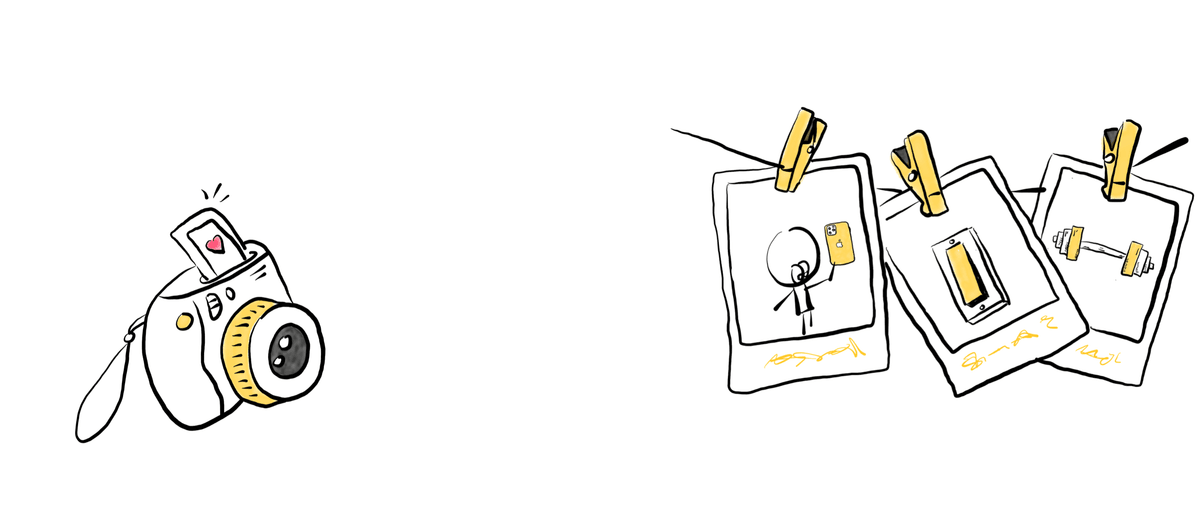
A picture forces you to choose. Who does something? Where? At what moment? A vague goal leaves all those questions open. A picture answers them all at once. And so everyone knows what to do differently tomorrow.
From a big goal to a small action for each person
You can go one step further. A big goal only becomes real when you translate it to every level of the organisation.
Each department can choose its own contribution. Something that fits its work. The accounting team, for example, uses less paper. The sales team chooses more online meetings, instead of driving an hour to meet in person.
Now everyone knows what is expected of them. And that increases the chance of success.
But you can make it even more personal. Make a list of 10 to 15 very specific actions people can take for sustainability. For example: cycling to work once a week. Taking public transport. Turning off the lights in the evening. Printing double-sided, before you click "print".
Each action must be tangible and doable. That way it can become part of a daily routine.
Then comes the most important step. Ask everyone to choose 3 to 5 actions that fit them.
Why does this work? When you choose for yourself, you have invested something. And when you invest something, it is easier to keep going. A vague goal of the organisation becomes a personal commitment.
What does research say about specific plans?
Research also shows that specific plans help. In 2011, Katherine Milkman and her colleagues ran a study with employees of a large company. It was about the flu vaccine.
Everyone received a reminder about the flu vaccine. Some people also got a box on that reminder. There, they could write down the date and the time of their vaccine.
People whose reminder had a box for the date and time got vaccinated more often than people who only received the reminder. In the group with only a reminder, 33.1 percent got vaccinated. In the group with the date-and-time box, this was 4.2 percentage points higher. A box for only the date made no clear difference.
That may look small. But almost nothing changed: one box on a piece of paper. People got the chance to make their own plan specific. That way, they could see the moment in front of them.
That study was about one behaviour, not about change in an organisation. But the principle is the same: the more specific you make it, the bigger the chance that it happens.
Your tip for tomorrow
Take one change goal that matters in your organisation or team right now. Write it down.
Then ask: can I take a picture of this?
If you cannot, make it more specific. Keep going until you can really see the new behaviour. Who does what, and when?
Start small, but think big. And watch the impact grow.
Over to you
Which goal in your organisation is still too vague? What would you see if you could take a picture of it? And which 3 actions would you choose yourself?
Want to read more?
- Milkman, K. L., Beshears, J., Choi, J. J., Laibson, D., & Madrian, B. C. (2011). Using implementation intentions prompts to enhance influenza vaccination rates. PNAS. https://pmc.ncbi.nlm.nih.gov/articles/PMC3127912/
About Cyriel Kortleven
Cyriel Kortleven is a professional speaker on the change mindset, from Antwerp. He has spoken in 42 countries and wrote 5 business books, including The Change Mindset. He is a CSP (Certified Speaking Professional) and one of 44 Global Speaking Fellows worldwide (October 2026). Want him as a speaker? Go to Book a speech.